The model
BringBoo launched in Hamburg at the end of 2020. There is no BringBoo warehouse. Pickers buy from the partner’s shelf; riders do last mile. Partners in that period included Edeka, Penny and Nahkauf (REWE), Metro, Hugendubel, Obi. The catalog is not only food: books, consumer electronics, fashion and lifestyle were in the pitch, with Hugendubel as an early non-grocery test. Delivery is 45 minutes or a chosen window. The company ran two apps: one for the customer, one for logistics. I designed the customer one.
That model decides the UI. Stock is whatever is in that store. Substitutions are normal. A frozen item that sits too long is not “the rider was late.” You shop a retailer, not an anonymous dark store.
What I designed
Customer app through release, and the Figma system so web did not drift from mobile. Routing and the shopper/rider app were logistics. Store, slot, basket, substitutions, and status were the design problem.
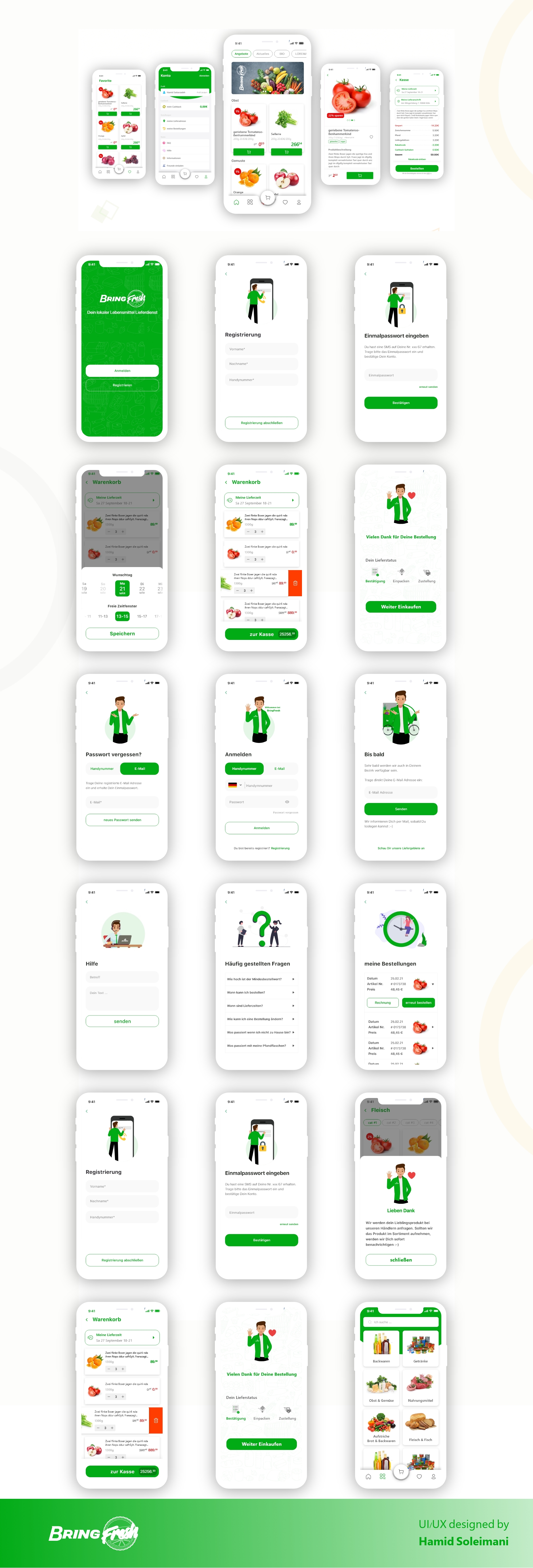
- The 45-minute promise and the timeslot sit in the shopping path. If the window is gone, that has to show before the cart is full.
- Catalog and prices belong to the shop you picked. Merging inventory across Edeka and Penny would have been easier in the database and wrong at the shelf.
- Tracking and substitutions got a dedicated pass after launch. That is what moved CSAT, not a denser homepage.
After launch
50k+ downloads in the first quarter. Satisfaction up 35% after the tracking and substitution work. Company context: BringBoo on LinkedIn.